
Policy Plug


Truck Report: Driving the Just Transition
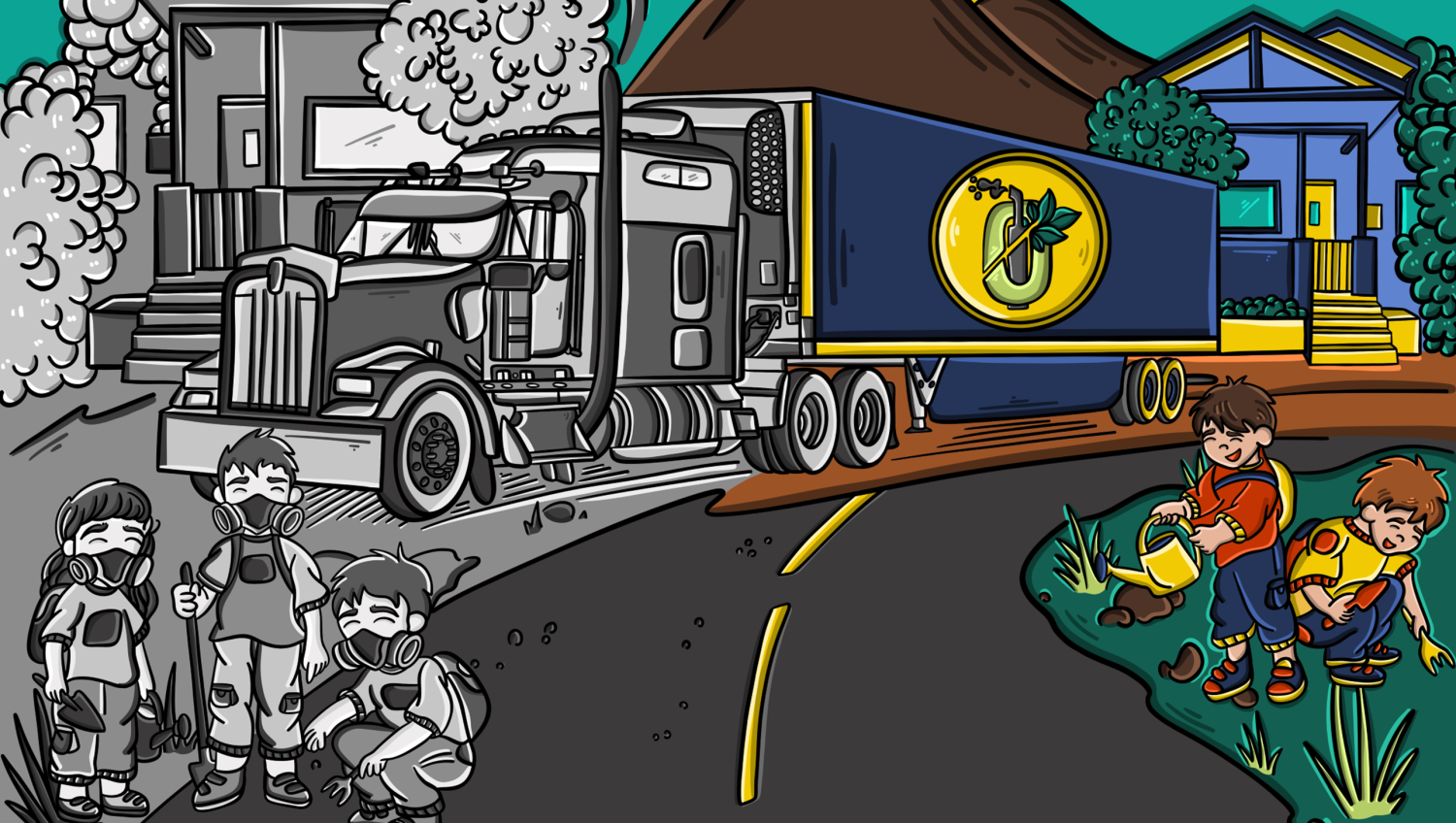
SAN BERNARDINO, CA — The People’s Collective for Environmental Justice (PC4EJ) released Driving the Just Transition, a groundbreaking community‑led report examining the environmental, economic, and social impacts of transitioning to Zero Emission (ZE) trucks in the Inland Empire. Drawing on surveys and interviews with truck drivers and residents in Colton, Bloomington, and San Bernardino, the report reveals deep concerns about pollution, health impacts, misinformation, and job stability, while also highlighting opportunities for a fair and equitable transition.
The study finds that low‑income communities of color continue to bear the brunt of diesel truck pollution, facing elevated risks of asthma, cancer, and other health harms. Truck drivers, meanwhile, report significant confusion about new regulations, limited access to reliable information, and fears about the cost and feasibility of switching to electric trucks.
Key findings from the report include:
-
Communities overwhelmingly support a transition to ZE trucks but fear becoming new “sacrifice zones” if infrastructure is not planned equitably.
-
Truck drivers recognize the health benefits of cleaner technology but cite major barriers, including charging access, misinformation, and high upfront costs.
-
Both groups call for transparent communication, job training, and investments that prioritize frontline neighborhoods.
Despite ongoing challenges, including infrastructure gaps and the high cost of ZE trucks, the report identifies clear pathways for a just transition. These include expanding incentives, strengthening community engagement, and ensuring that drivers and residents have a meaningful voice in shaping the future of freight.

Controversial Bloomington Warehouse Projects goes before the San Bernardino Court over Discriminatory Housing Claims
SAN BERNARDINO, CA — Community advocates and residents will gather at the San Bernardino Justice Center as the controversial Bloomington Business Park warehouse project returns to court over claims that the development violates fair housing and civil rights protections. The press conference will take place on Friday, June 5, 2026 from 9:00 to 9:45 AM on the courthouse steps of the Superior Court of California, County of San Bernardino, located at 247 W. Third Street in San Bernardino.
Speaking at the event will be Tania Gonzalez of The People’s Collective for Environmental Justice, along with former Bloomington residents Felipe Ortiz and Fatima Ortiz, and current resident Xochitl Pedraza. A speaker will also present findings from the recent Region in Crisis report, which documents the widespread impacts of warehouse expansion across the Inland Empire.
The June 5 hearing marks a significant moment in the ongoing fight over the Bloomington Business Park project, one of the most contentious warehouse developments in the region. The lawsuit argues that approving a project that would demolish more than 100 homes in a predominantly Latino, working‑class community while increasing pollution and displacement raises serious civil rights and housing justice concerns. The court has already ruled that San Bernardino County violated the California Environmental Quality Act and ordered the County to redo its environmental review. Advocates are now asking the court to determine whether the County also failed to meet its legal obligation to affirmatively further fair housing, a decision that could set an important precedent for how local governments balance economic development with fair housing and environmental justice protections.
At the center of the case is whether communities like Bloomington can be protected from projects that eliminate affordable housing, deepen segregation, and concentrate environmental harms in neighborhoods that have long borne the burdens of industrial development. The situation reflects a broader regional crisis. Across the Inland Empire, warehouse expansion continues to replace housing, increase truck traffic, and intensify pollution in low‑income communities of color, even as the region faces a severe housing shortage and growing public health concerns. As outlined in the Region in Crisis report, Bloomington is not an isolated example but part of a larger pattern of industrial growth that prioritizes warehousing over housing, health, and community well‑being.
Protect Our Communities from Port Pollution
Join us at AQMD to demand accountability from the Ports of LA & LB and protect our region from freight-related emissions.
Even miles from the Ports of Los Angeles and Long Beach, our communities bear the burden of their pollution. One-third of all containers arriving at the Ports travel through our neighborhoods by train. The rest? They’re hauled in by trucks heading to warehouses built dangerously close to our homes, schools, and parks.
The Ports grew because our region built the infrastructure to support them. Now they want to double in size, without a clear plan to address the toxic emissions that expansion will bring.
📣 This Friday at 9 AM, join us at AQMD to stand with neighboring communities and demand clean air, environmental justice, and real accountability from Port polluters. Our voices matter. Let’s make them heard.
To get involved locally at the ports, reach out to our friends at East Yard Communities for EJ.
11/07/2025 AT 9:00 AM
In-Person at: Dr. William A. Burke Auditorium
South Coast AQMD Headquarters
21865 Copley Drive, Diamond Bar
Or Remotely via Zoom Webinar Link: https://aqmd.zoomgov.com/j/1600528849
Zoom Webinar ID: 160 052 8849
Monthly meeting of the Governing Board.
SB 34 Veto Preserves Local Power to Protect Clean Air
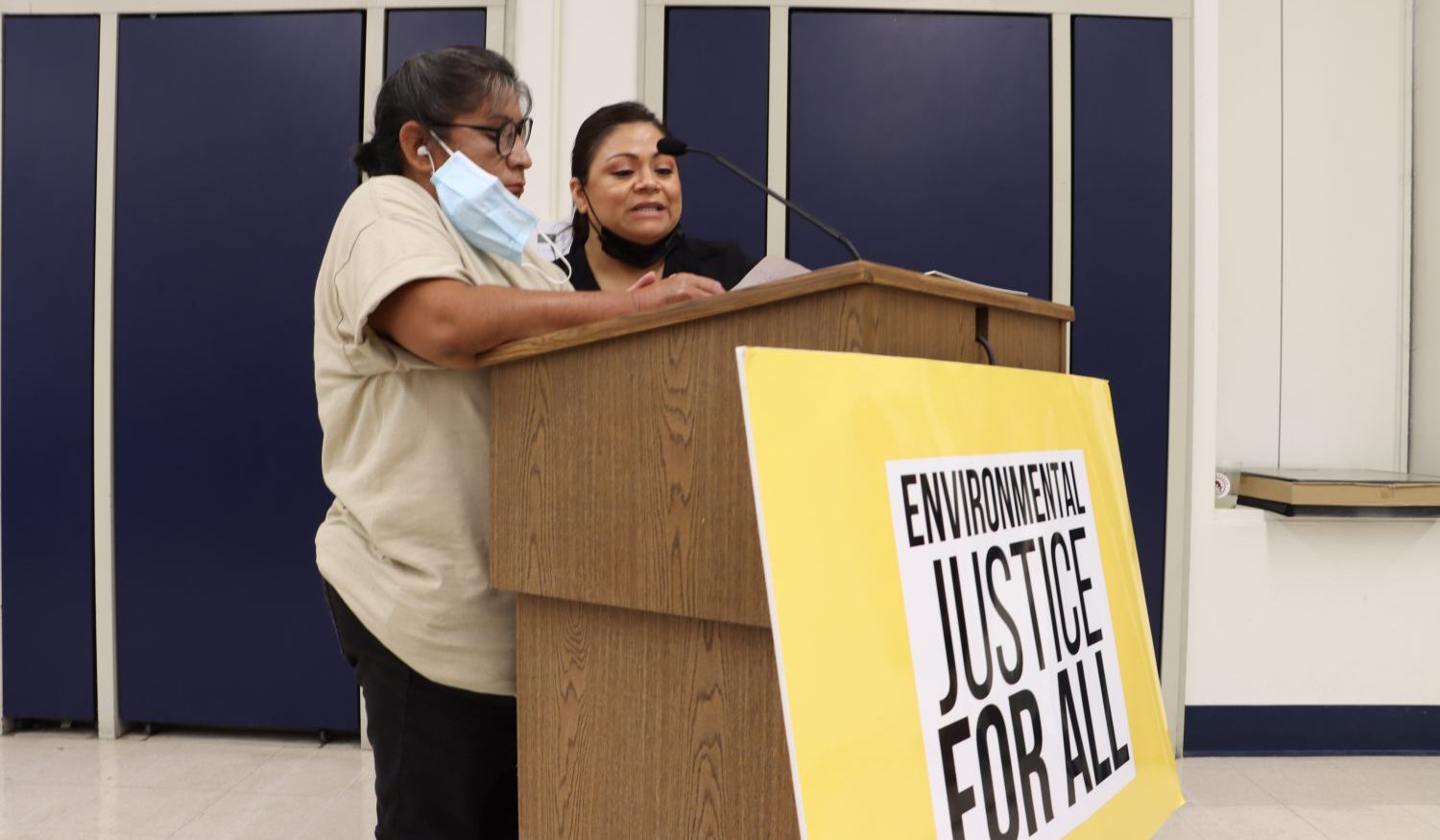
SAN BERNARDINO, CA – Environmental justice organizations across California raised concerns about Senate Bill 34 and its potential to limit the authority of local air districts to regulate pollution from freight hubs, ports, and warehouses. Today, we share an important update: SB 34 has been vetoed.
This decision helps preserve the ability of agencies like the South Coast Air Quality Management District (AQMD) to enforce community-driven Indirect Source Rules (ISRs), which have led to cleaner air and healthier neighborhoods across our region.
“The veto of SB 34 helps preserve the authority of our local air district to regulate the goods movement industry,” said Andrea Viduarre, Policy Analyst and Advocate, People’s Collective for Environmental Justice (PC4EJ). “In a time when communities are increasingly concerned about air quality and environmental health, it’s vital that local agencies retain the ability to protect public health. We’re grateful to the many residents and organizations who raised their voices on this issue. We hope this moment encourages AQMD to continue exercising its regulatory power in service of clean air. We will also continue to highlight concerns that electrification should not lead to increased automation at the expense of port workers.”
PC4EJ remains committed to educating communities about the policies that shape our environment and health. We encourage residents to stay informed, attend public meetings, and continue advocating for clean air solutions that reflect local needs.
Clean air isn’t a luxury. It’s a necessity.
For more background on SB 34 and its implications, read our original post: When Cleaner Air Gets Blocked, Communities Pay the Price.
When Cleaner Air Gets Blocked, Communities Pay the Price
UPDATE: SB 34 Veto Preserves Local Power to Protect Clean Air
In California, clean air isn’t just an environmental issue, it’s a matter of justice, health, and community voice. A proposed bill called SB34 could quietly reshape how local air districts protect us from pollution, and the consequences run deep.
SB34 targets Indirect Source Rules (ISRs), the flexible, community-driven policies that allow regions like ours to reduce air pollution from freight hubs, ports, warehouses, and other mobile sources. These rules have already led to real progress, like investments in zero-emission fleets, electric charging stations, and cleaner operations that benefit the people who live, work, and go to school nearby.
But if SB34 moves forward, that momentum could stall. Local agencies may lose their authority to enforce health-protective policies based on community needs. Residents who have spent years advocating for stronger air quality standards could find their voices silenced mid-process. And vague legal language in the bill threatens to freeze innovation and delay solutions, just as pollution spikes are expected this summer in key shipping regions.
This isn’t about politics. It’s about people.
Families near freight corridors already face higher rates of asthma and respiratory illnesses. They deserve clean air, just like anyone else. SB34 could strip away the tools our districts use to help meet those needs. Meanwhile, broader litigation risks and environmental setbacks could cost California millions, economically and medically, while leaving vulnerable communities in limbo.
We’re here to build understanding and a healthier future for all.
As neighbors, leaders, educators, and advocates, we have the right to learn what’s happening and ask questions that shape our future. That means attending community meetings, staying informed, and helping others understand why bills like SB34 matter, even when they’re complex.
Clean air isn’t a luxury. It’s a necessity.
Let’s keep learning, sharing, and protecting the people and places we love. Because when local voices are heard, change becomes possible, from warehouse corridors to our classroom windows.