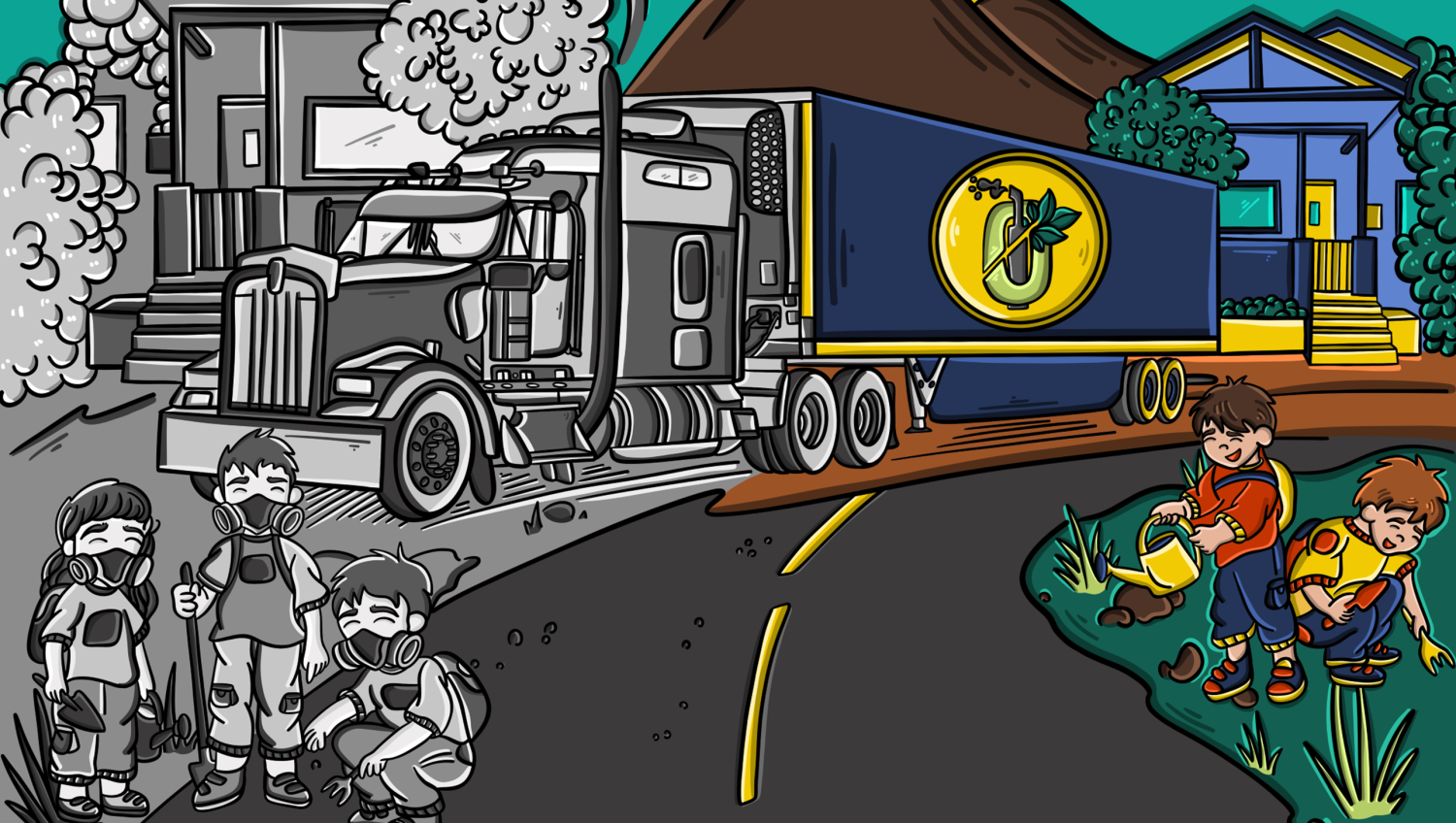
When Cleaner Air Gets Blocked, Communities Pay the Price
UPDATE: SB 34 Veto Preserves Local Power to Protect Clean Air
In California, clean air isn’t just an environmental issue, it’s a matter of justice, health, and community voice. A proposed bill called SB34 could quietly reshape how local air districts protect us from pollution, and the consequences run deep.
SB34 targets Indirect Source Rules (ISRs), the flexible, community-driven policies that allow regions like ours to reduce air pollution from freight hubs, ports, warehouses, and other mobile sources. These rules have already led to real progress, like investments in zero-emission fleets, electric charging stations, and cleaner operations that benefit the people who live, work, and go to school nearby.
But if SB34 moves forward, that momentum could stall. Local agencies may lose their authority to enforce health-protective policies based on community needs. Residents who have spent years advocating for stronger air quality standards could find their voices silenced mid-process. And vague legal language in the bill threatens to freeze innovation and delay solutions, just as pollution spikes are expected this summer in key shipping regions.
This isn’t about politics. It’s about people.
Families near freight corridors already face higher rates of asthma and respiratory illnesses. They deserve clean air, just like anyone else. SB34 could strip away the tools our districts use to help meet those needs. Meanwhile, broader litigation risks and environmental setbacks could cost California millions, economically and medically, while leaving vulnerable communities in limbo.
We’re here to build understanding and a healthier future for all.
As neighbors, leaders, educators, and advocates, we have the right to learn what’s happening and ask questions that shape our future. That means attending community meetings, staying informed, and helping others understand why bills like SB34 matter, even when they’re complex.
Clean air isn’t a luxury. It’s a necessity.
Let’s keep learning, sharing, and protecting the people and places we love. Because when local voices are heard, change becomes possible, from warehouse corridors to our classroom windows.